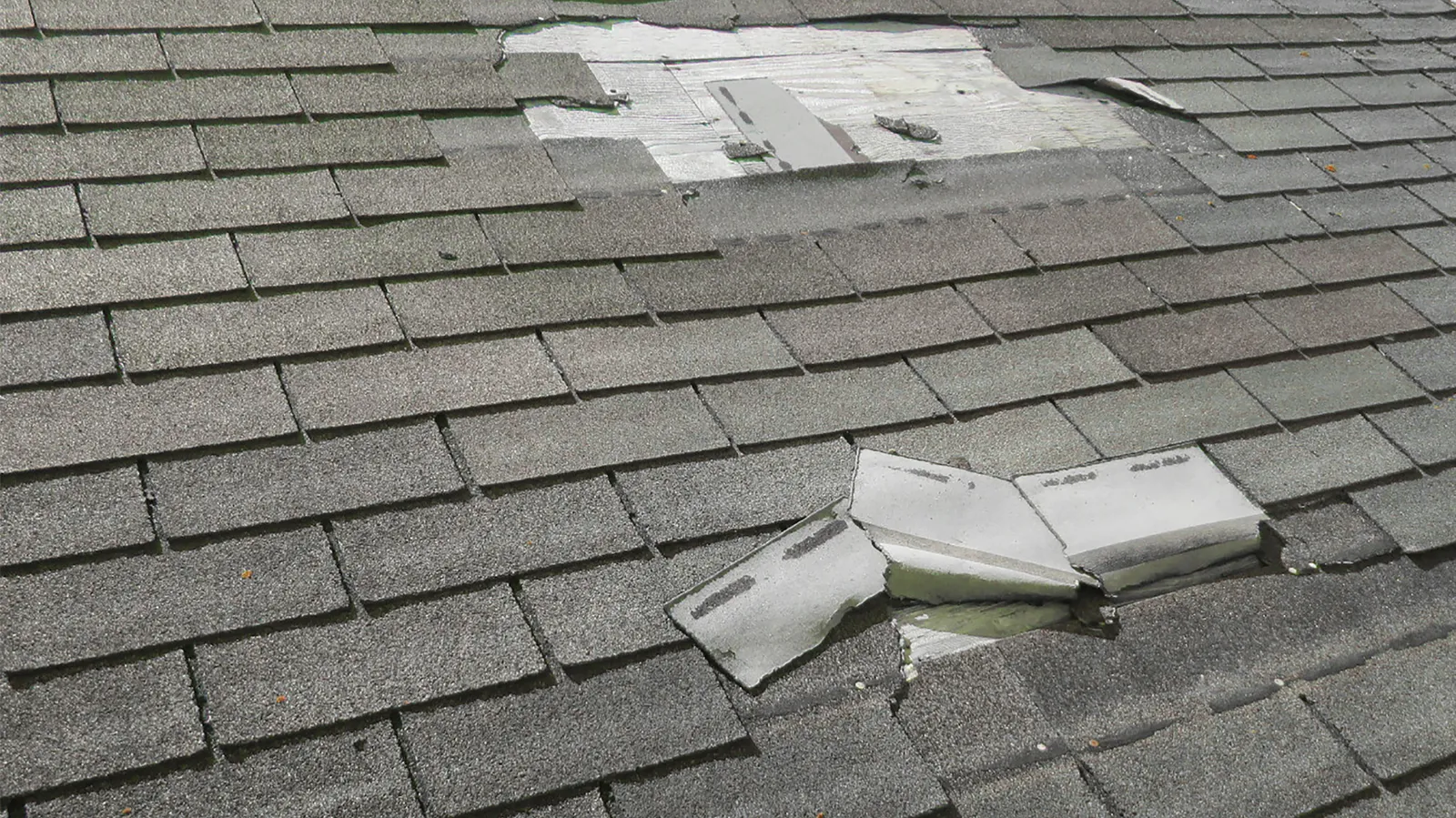
Hail is the reason most roofs in this part of Texas finish early, and unlike a lot of storm talk the record behind it is public. The National Weather Service logs every reported hail event by county, with a date, a size and a location. Reading that record is a good deal more useful than a door-knocker's account of what happened to your street last spring, and it takes about five minutes.
What the four-year record actually holds
Across the window ending in 2026, storm reports for Denton County log thirty-three separate hail days and one hundred and sixty-eight hail reports. One hundred and thirty-nine of those were at least an inch across, which is roughly the size at which hail starts costing roofs rather than paint. The largest single stone in the record measured close to six inches, reported near Sanger.
Wind travels with it. The peak recorded gust for the county across the same window reached ninety-six miles an hour. Those are county figures, and the county is large, so they describe the weather your roof lives in rather than an event at your address.
County numbers are not an address
This is the distinction that matters when someone knocks. A report tagged near Sanger or Bartonville is a Denton County report, and Sanger is a long way from Lewisville. The record does include events tagged at Lewisville itself, including three-inch hail in June of 2023 and an eighty-one mile an hour straight-line gust in May of 2024.
Treat the county figures as the backdrop and the town-tagged events as the foreground. Neither one proves anything about a particular roof, which is the honest limit of public data and the reason an inspection exists at all.
Bruising, not holes
Hail damage on an asphalt roof rarely looks like a hole. It looks like a bruise: a soft spot where the stone knocked granules loose and dented the mat underneath. Those bruises fail slowly, over the seasons after the storm, which is why a roof can look fine from the yard and still be finished.
A roofer checks by hand as much as by eye, because bruising reads through the fingertips before it reads in a photograph. Soft metals are the tell that gets checked first: gutters, vents and flashing dent at a lower threshold than shingles, so marks up there tell you whether the roof itself is worth a closer look.
What to do with the information
If a storm has come through and the soft metals are marked, having the roof looked at is reasonable regardless of what the county record says. If the metals are clean and the record shows nothing tagged nearby, there is a fair chance the roof came through it.
Either way the decision to open an insurance claim belongs to the homeowner and the carrier, and it is worth weighing the likely repair against the deductible before anything is filed. A roofer's job is to find the damage, photograph it and price the work in terms an adjuster can read.
Lewisville Apex Roofing does not inspect roofs or handle claims. Both belong to the roofer and to your carrier, and the photographs that support a claim come from the person who was up there.
The repair side is covered on the hail damage page, and the carrier side in the claim guide.
If a storm has been through and you want the roof read properly, that starts with a look at it.
Get started