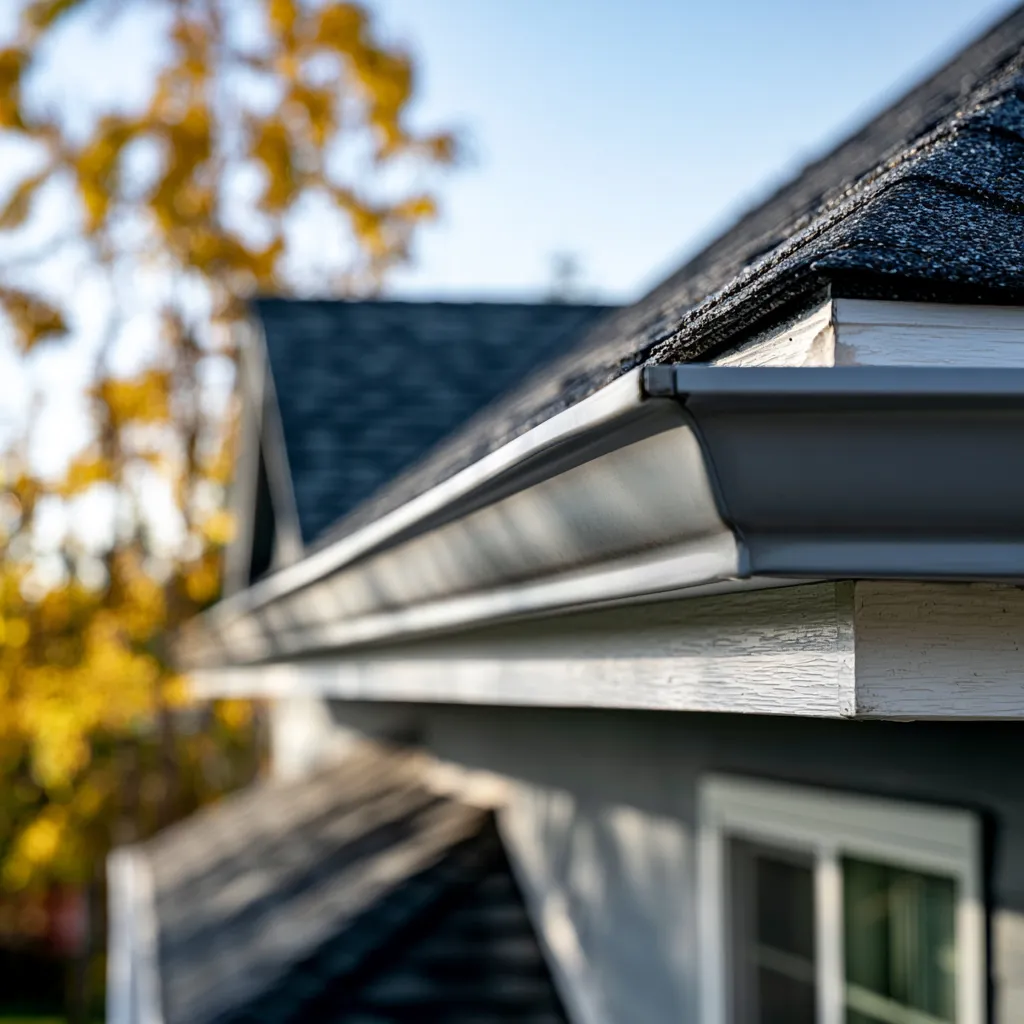
Gutter installation in Lewisville, TX
Gutter installation starts with sizing off the roof area feeding them. Undersized gutters overflow no matter how new.
Text a photo of the fascia and the damage usually shows in it.
Gutter installation in Lewisville, TX starts with the roof area
Gutter installation in Lewisville, TX is a calculation before it is a style choice. How much roof drains into a run, and how steep that roof is, sets the size of trough and the number of downspouts it needs, and getting that wrong produces a gutter that overflows in every heavy storm while looking perfectly sound.
North Texas rainfall arrives in bursts, which pushes the sizing question harder here than in a wetter climate with gentler rain.
- Measured: the roof area draining into each run, and the pitch above it
- Sized: trough width and downspout count to match that area
- Checked: the fascia behind, before anything is hung on it
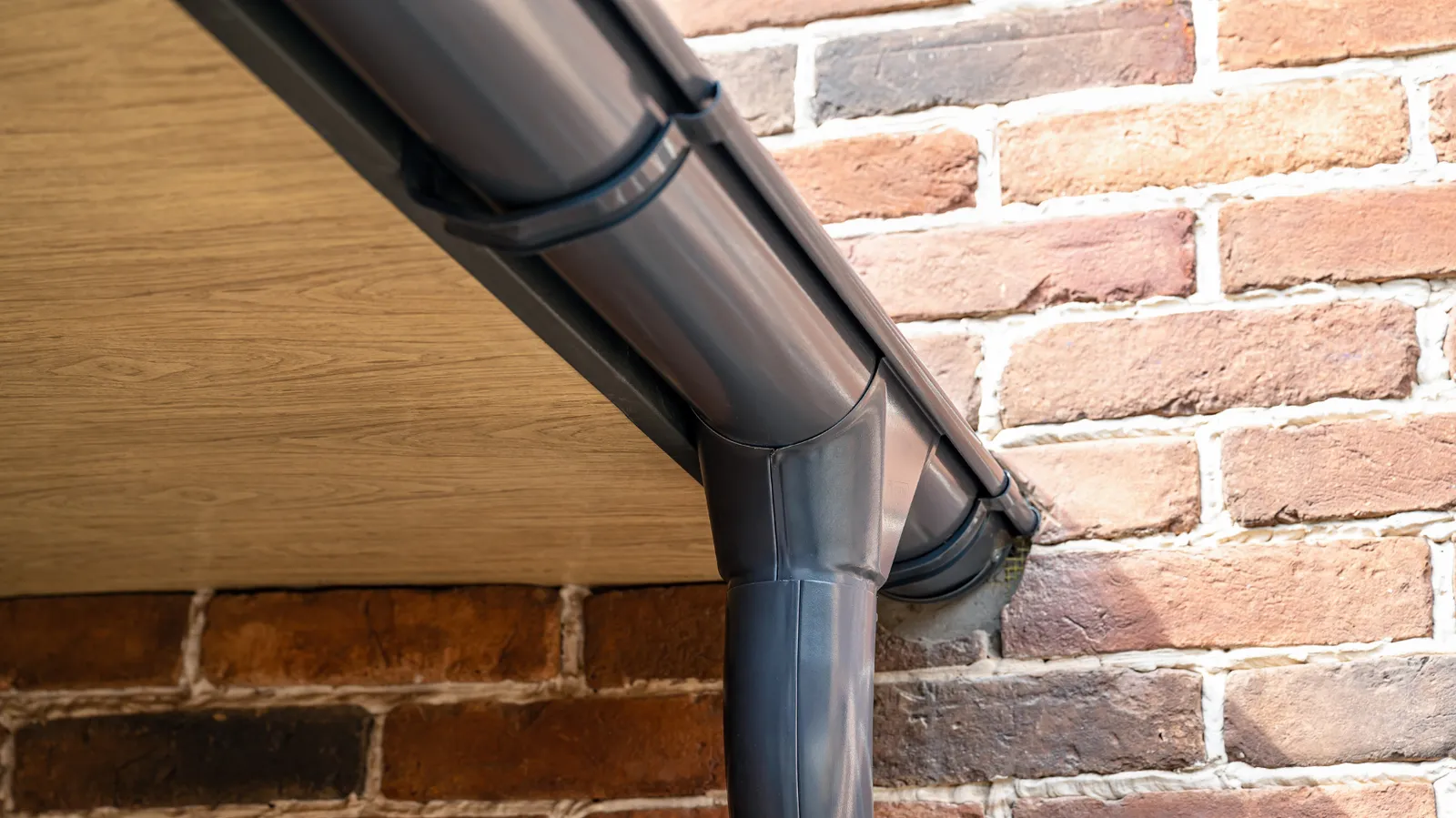
Gutter, hanger, downspout and the fascia behind them
Four parts, and the one most quotes ignore is the fourth. The ignored one is usually what sends water in behind the fascia. The board behind the trough is soffit and fascia work, and both often ride a replacement.
- 01The trough
- Commonly 5 or 6 inch K-style. The 6 inch carries substantially more water and pairs with larger outlets.
- 02Hangers
- Spacing matters more than brand. Too few and a full gutter sags, which then holds water and pulls on the fascia.
- 03Downspouts
- Number and placement, sized to the outlets. One undersized outlet makes a correctly sized gutter overflow anyway.
- 04The fascia behind
- The board everything hangs from. New gutter on rotten fascia is a job that gets done twice.
- 05Drip edge
- The metal that directs water off the roof edge and into the trough. Its absence is why some fascia boards rot while the gutter beside them looks fine.
- 06Discharge
- Where the water ends up. Code generally requires roof water put out clear of the foundation.
The roofer who installs it backs the workmanship on it.
Lewisville fascia gets checked before a single hanger goes in
The sequence, and the reason step one exists at all. Skipping it is why some new gutters overflow the week they go up.
The fascia is checked
Probed for soft wood along its length. Rotten board found now is a small addition to the job and found later is a redo of the whole run.
Runs measured and sized
Roof area per run, pitch, and where the water can be discharged. This decides trough size and downspout count.
Seamless lengths formed on site
Rolled to length at the house, so a run has no joints except at corners and outlets.
Hung, sloped and tested
Pitched toward the outlets and run with water to confirm it drains rather than pools.
What a failing gutter shows before it shows water
Gutters fail slowly and then all at once, and these are the tells that put the trough under suspicion first. Where the board behind has gone with it, soffit and fascia repair is the same visit.
- Water sheeting over the front edge in a heavy rain
- Streaks down the siding under one particular joint
- A section that has pulled away from the fascia at one end
- Standing water in the trough hours after the rain stopped
- Soil trenched out below a downspout that no longer reaches it
Lewisville gutters size to downpours, not to steady rain
Rain in this part of Texas arrives in short heavy bursts, and that is what overwhelms an undersized trough. A roofer sizes the run off the roof area feeding it, not off the length of the wall.
- 01Burst rainfall
- A gutter that copes with a drizzle can still overflow in a Texas downpour.
- 02Mature overhang
- The older streets carry more tree cover, and more of what comes out of it.
- 03The board behind
- Overflow rots the fascia the gutter hangs on, so the two get looked at together.
Guards, seamless runs, and what size a Texas roof needs
What decides most gutter quotes. Size, seams, and where the water finally lands.
Do I need 5 inch or 6 inch gutters?
Are gutter guards worth it?
What does seamless actually mean?
Can gutters be replaced without touching the roof?
Why does my new gutter still overflow?

Text a photo of the fascia line and the failing section
The fascia photograph answers the question that decides the job. If the board behind the gutter is sound, the job is a straight replacement; if it is not, that is worth knowing before the quote rather than after.
Prefer to talk? Call now: (469) 240-5301
Text a photo of the fascia line and there is nothing to decide on the spot.
Show where the water overflows and a roofer works out what is failing.