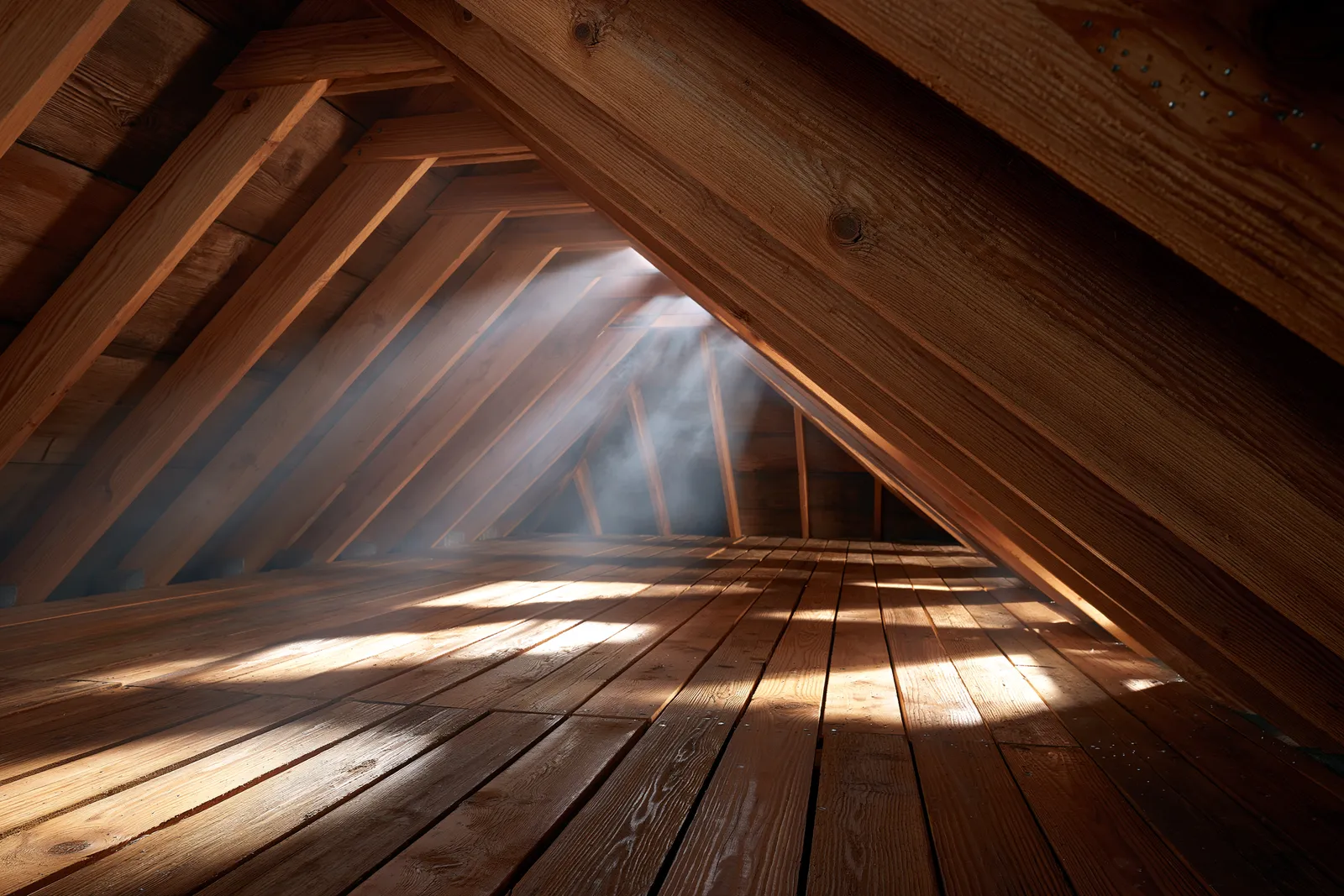
Roof ventilation in Lewisville, TX
Roof ventilation has to balance intake against exhaust. Most attics here fail on the intake side.
Say what the attic feels like in summer and a roofer reads it from there.
Roof ventilation in Lewisville, TX is an intake problem first
Roof ventilation in Lewisville, TX works as a pair or it does not work. Cool air has to enter low at the soffit and leave high at the ridge, and a system with plenty of exhaust and blocked intake pulls air from inside the house instead, which is worse than no ventilation at all.
Most attics with a heat problem here have adequate exhaust and choked intake. Insulation pushed over the soffit vents during a past job is the single most common cause, and it is invisible from the street.
- Low intake: continuous soffit venting, unblocked, along the eaves
- High exhaust: ridge or box vents, sized to match the intake below
- Balanced: roughly equal, with intake at least matching exhaust
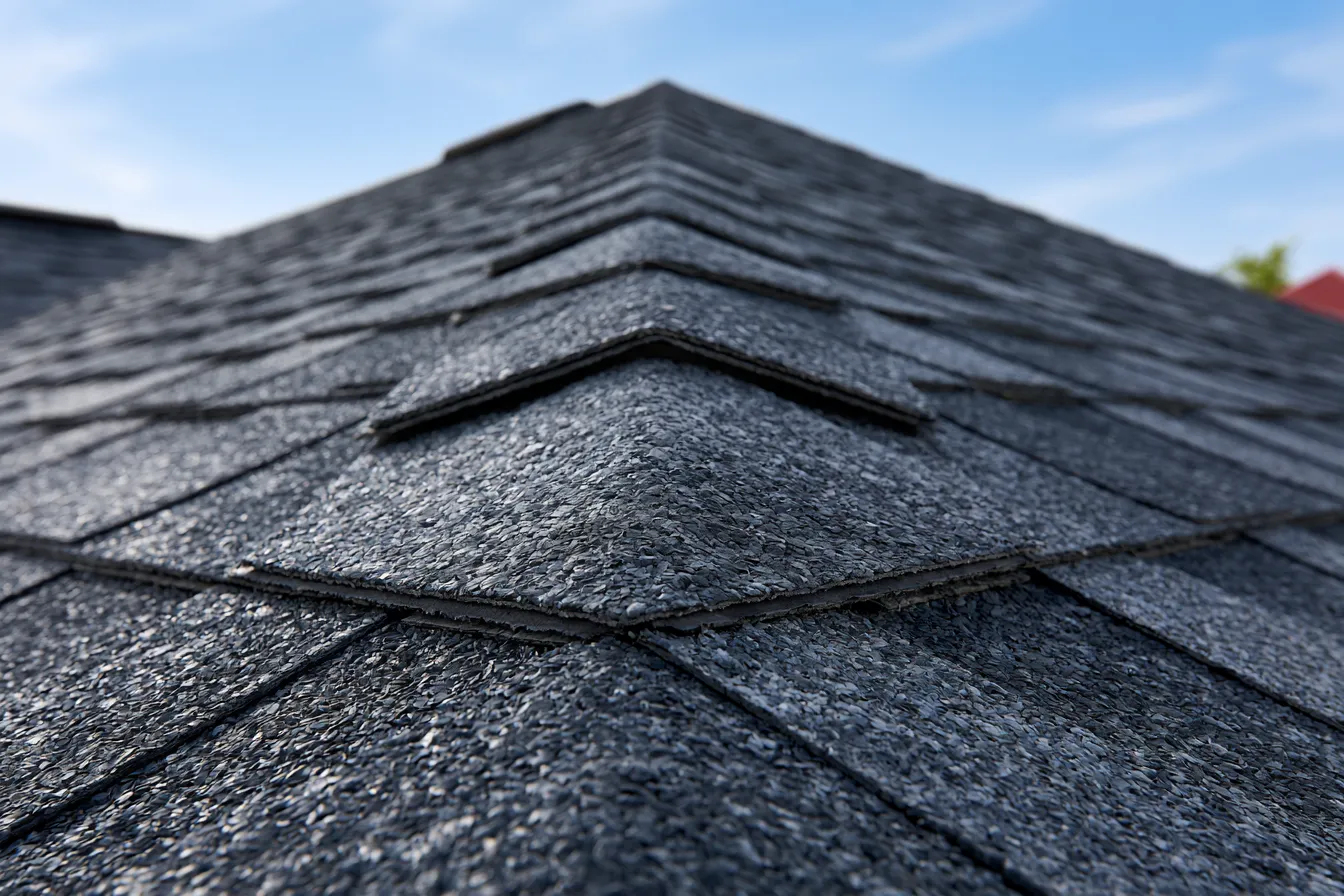
Soffit intake, ridge or box exhaust, and the balance on a Lewisville roof
Three parts of one system. Adding to the third without checking the first is the usual mistake. Ventilation is cheapest to correct during a replacement, which is also when the decking is visible.
- 01Soffit intake
- Continuous or individual vents along the eave. The most common defect is insulation blocking them from inside.
- 02Baffles
- Channels that hold insulation clear of the soffit so air can pass. Cheap, and routinely missing.
- 03Ridge exhaust
- A continuous vent along the peak, cut into the decking and capped. The most even exhaust available.
- 04Box or turbine vents
- Used where a ridge run is short or interrupted. Mixing exhaust types can short-circuit the airflow.
- 05Gable vents
- Common on older houses here, and often best closed off when a ridge system goes in, to stop air bypassing the attic. Leaving both open lets the ridge pull air from the gable instead of the soffit.
- 06Net free area
- The measured open area of the venting, which is what the balance is calculated from. A vent's advertised size and its net free area are rarely the same number.
The work and its workmanship warranty belong to the roofer doing it.
Net free area gets calculated before anything is cut
A calculation, not a judgment call, and one you can ask to see. The numbers come off the attic footprint and the venting already there.
The attic is looked at
Whether intake is blocked, what exhaust exists, and what the insulation is doing at the eaves.
Net free area is calculated
Attic square footage against the open area of the venting, split between intake and exhaust.
Intake is corrected first
Clearing and baffling soffit vents costs little and frequently solves the problem without cutting a ridge.
Exhaust is matched to it
Ridge or box venting sized to the intake, with mixed exhaust types avoided so air does not short-circuit.
What a badly vented Lewisville attic does to the shingles above it
Ventilation problems usually show up as a roof problem, which is why they are so often misdiagnosed. Each of these points at the attic before it points at the roof.
- Shingles aging visibly faster on one slope than another
- Curling or blistering across a slope with no storm to explain it
- An attic that is far hotter than the outside air on a summer afternoon
- Damp decking or rusted nail points in winter, from moisture with nowhere to go
- Manufacturer warranty language naming ventilation as a condition
- Cooling bills that climb while the air conditioning is working correctly
Attic-level observation only. A roofer confirms the cause rather than the symptom.
A Texas attic punishes a roof from underneath
Summer heat in an under-ventilated attic ages a covering from the back side, where nobody looks. A roofer measures intake against exhaust before adding anything at the ridge.
- 01Intake first
- Most attics here fall short on intake, and adding exhaust alone makes that worse.
- 02Blocked soffits
- Insulation pushed into the eave closes the intake it was meant to leave open.
- 03What it costs
- Heat shortens the life of the shingle above it, quietly, over years.
Ridge vents, turbines, and whether a fan is worth it
The exhaust options, answered on what each one does. Mixing two of them is the most common mistake made here.
Is a ridge vent better than turbines?
Is a powered attic fan worth installing?
How do I know my intake is blocked?
Does ventilation really affect shingle life?
Can ventilation be fixed without replacing the roof?
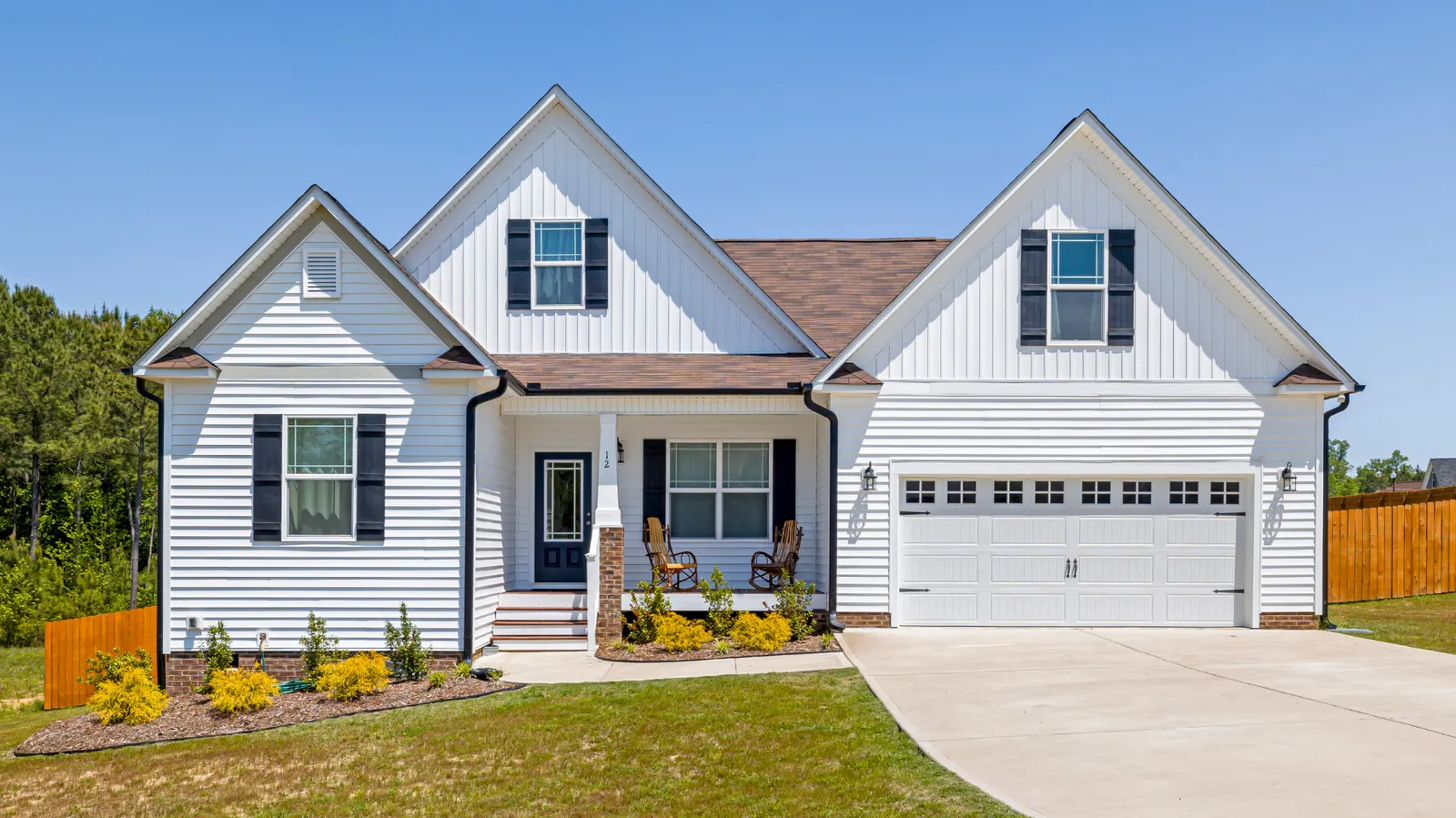
An attic look tells you more than the roof does
Twenty minutes in an attic answers what an hour on the roof cannot. Blocked soffits, damp decking and rusted nail points are all visible from underneath, and they explain most premature roof aging in houses of this era.
Prefer to talk? Call now: (469) 240-5301
An attic assessment leaves you with the findings and no obligation.
Describe the attic heat, since intake and exhaust get looked at together.