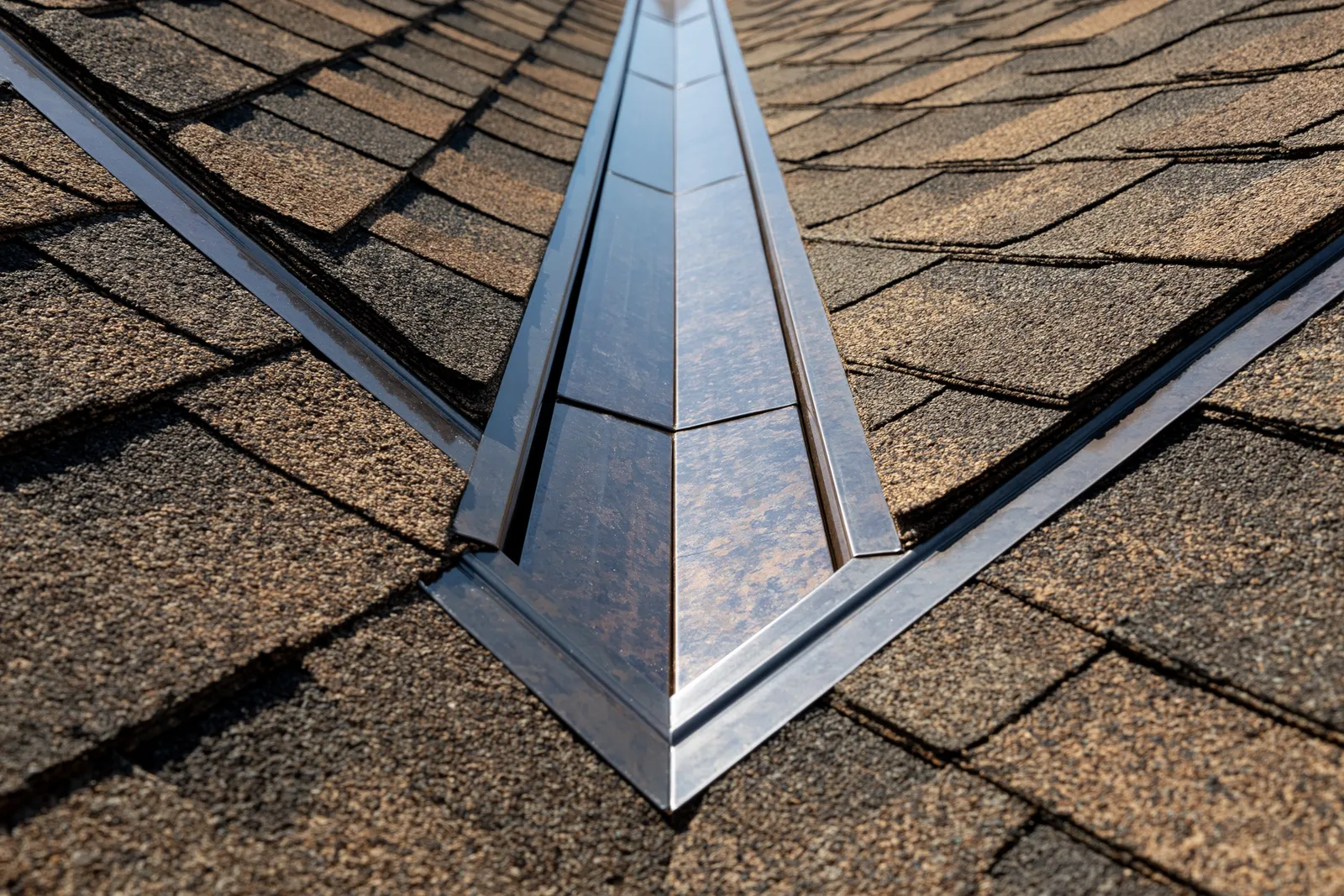
Chimney flashing repair in Lewisville, TX
Chimneys leak at the metal, not the masonry. Sealant smeared over old flashing is not a repair.
Two photos from the yard usually show how the flashing sits.
Chimney flashing repair in Lewisville, TX is layered work
A chimney interrupts a roof, and the metal around it is what keeps that interruption watertight. The system is layered on purpose: step flashing woven into the shingle courses, counter-flashing cut into the masonry above it, and a cricket behind a wide chimney to split the water.
Each layer covers the one below. A bead of sealant across the top of all of them covers nothing and lasts a season, which is why so many chimney leaks return after being fixed.
- Step flashing: individual pieces woven course by course up each side
- Counter-flashing: cut into a mortar joint, lapping over the step flashing
- Cricket: a small ridge behind a wide chimney that splits water around it
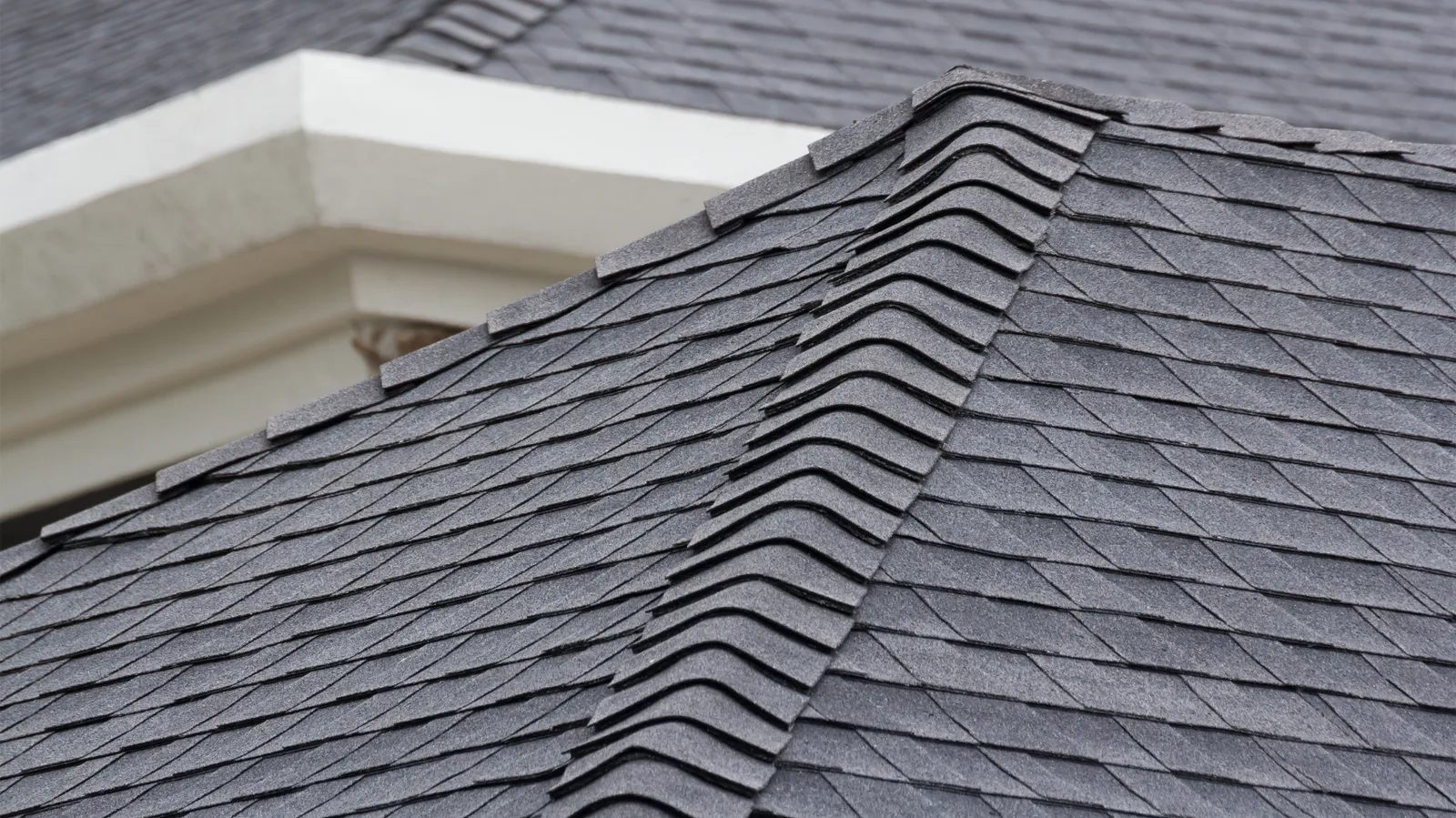
Step flashing, counter-flashing, cricket and crown
Four elements, and one of them belongs to a different trade. Knowing which saves a wasted visit. Flashing is also the usual answer on a roof leak, and the same detail gets rebuilt during a replacement.
- 01Step flashing
- Bent pieces woven into each shingle course up the chimney sides. Replaced, not resealed, when it fails.
- 02Counter-flashing
- Let into a cut in the mortar joint and sealed there, lapping over the step flashing below it. Surface-mounted versions sealed to the brick face are the common shortcut.
- 03Cricket or saddle
- Required behind wider chimneys so water is split around them instead of damming behind. Code generally calls for one past a certain chimney width.
- 04Base and apron
- The flashing across the low side, which takes the concentrated flow off the roof above. It carries more water than any other piece around the chimney.
- 05The crown
- The concrete cap on top. Cracked crowns leak into the chimney itself, and that is masonry work for a mason.
- 06Shingle courses either side
- Lifted and re-laid to weave the new step flashing in, which is why this is roof work and not a caulking job. A quote that skips this step is quoting something else.
Roofing work and its warranty belong to the roofer. Masonry repair belongs to a mason.
On a Lewisville chimney, old flashing comes out; sealant over it does not count
What a proper chimney flashing repair actually involves, stated so a quote can be measured against it. Every step here is why the job costs more than a tube of sealant. The same flashing detail is checked on an inspection and rebuilt during a replacement.
The leak is confirmed at the chimney
Water around a chimney can come from the flashing, the crown, or the masonry itself, and the three are different repairs by different trades.
Shingles lifted and old metal removed
Step flashing is woven in, so reaching it means opening the courses either side. That is the work.
New step and counter-flashing installed
Counter-flashing cut into the mortar joint rather than surface-sealed against the brick.
Shingles re-laid and details sealed
Courses re-woven over the new metal, with sealant used where it belongs and nowhere as a substitute for metal.
A Lewisville chimney leak announces itself indoors first
The metal fails long before the brick does, and the evidence usually turns up in the room below. A roof inspection confirms which part of the joint gave.
- A stain on the ceiling on one side of the chimney only
- Damp or a musty smell in the attic near the chase
- Caulk visibly smeared along the joint from an earlier repair
- Rust streaks on the shingles below the flashing line
- Mortar crumbling where the counter-flashing tucks in
Flashing work prices on whether the joint is resealed or rebuilt
The cheapest version is a reseal and the most expensive is a rebuilt joint with new counterflashing. A roofer reads which one the chimney needs, usually from the ground.
Get a free estimate- A reseal buys time when the metal underneath is still sound
- New step and counter flashing means cutting back into the masonry and starting again
- Brick and mortar condition decides whether a new reglet will hold at all
- A chimney partway down a slope collects more water than one at the ridge, and prices like it
Lewisville chimney leaks begin where the metal meets the brick
The joint between masonry and roof is the part that moves, and movement opens it. A roofer reads that joint before deciding to reseal or rebuild it.
- 01Old sealant
- A smear of caulk over failed metal buys a season and hides the condition underneath.
- 02The uphill side
- Water stacks against the high side of a chimney, which is what a cricket is built to divert.
- 03Masonry condition
- Mortar that will not hold a new reglet turns a flashing job into a masonry one.
Sealant, masonry work, and who handles which part
The trade boundary, answered before you book the wrong person. Some of this is roofing work and some of it belongs to a mason.
Can the flashing just be sealed?
Is the chimney itself the roofer's job?
What is a cricket and do I need one?
Why does my chimney leak only in heavy rain?
Can this be done without a full re-roof?
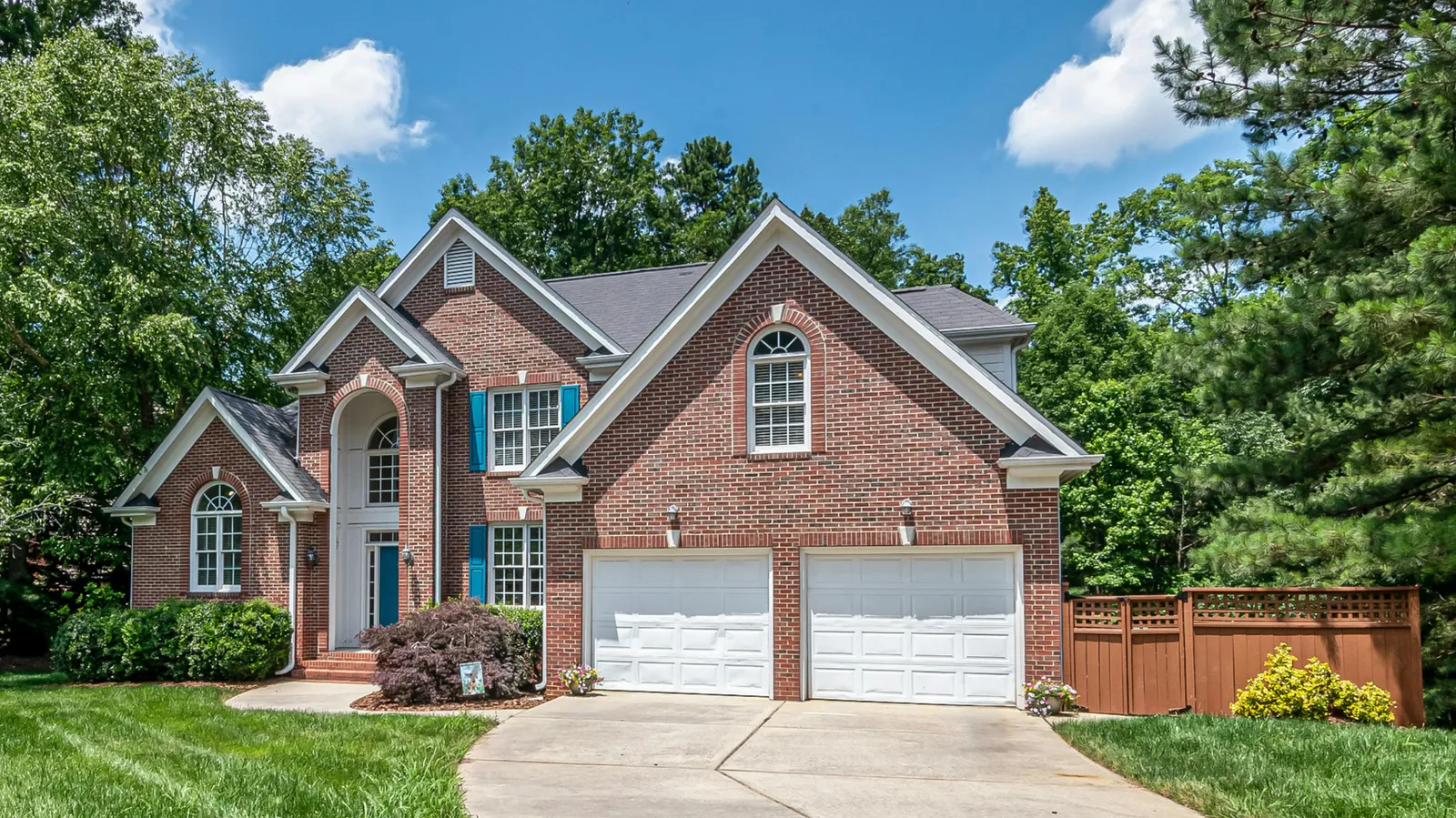
A photo of the chimney from two sides helps
Two angles usually show whether the counter-flashing is cut into the masonry or surface-sealed against it. That one detail predicts most of what the repair involves, and it is visible from the ground with a zoom.
Prefer to talk? Call now: (469) 240-5301
A photograph of the chimney is enough to start, with no obligation.
Send two angles of the chimney and a roofer reads the joint from them.