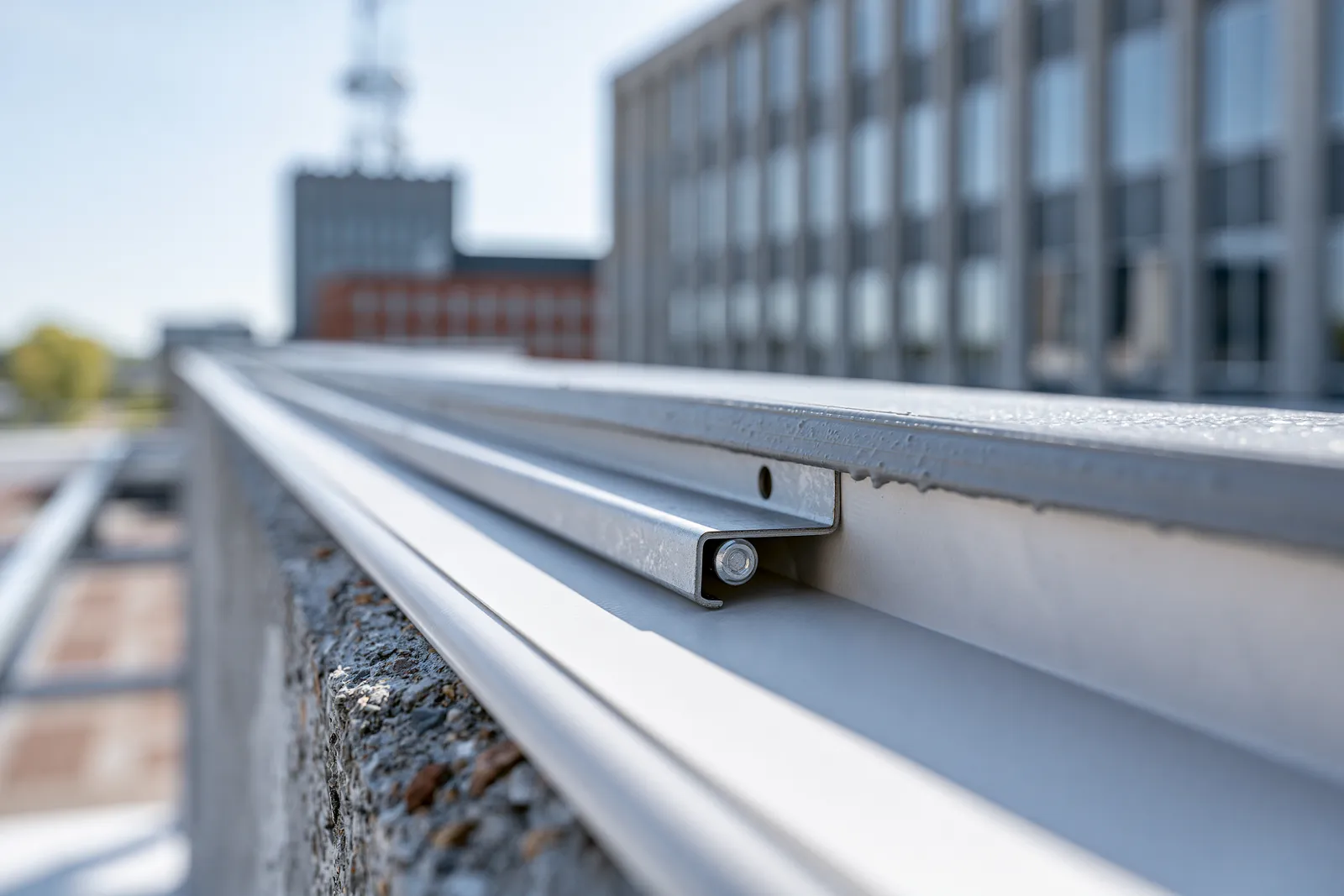
Flat roof repair in Lewisville, TX
Flat roof repair means seams and edges, because that is where low-slope systems fail. The open field is rarely it.
Say what the ceiling shows and a roofer checks the seams above it.
Flat roof repair in Lewisville, TX is nearly always a seam
Low-slope roofing keeps water out by being continuous, and every place it stops being continuous is a candidate. Seams, terminations at walls and parapets, and the collars around every penetration account for most flat roof failures, while the wide open middle of the roof usually outlives all of them.
That changes how a flat roof is inspected. Walking the field and looking for a hole finds very little; checking every joint and edge finds the problem.
- Seams: where two sheets meet, welded or bonded, and where age shows first
- Terminations: the edge at a wall, parapet or curb, sealed and mechanically held
- Penetrations: drains, vents, pipes and anything else through the membrane
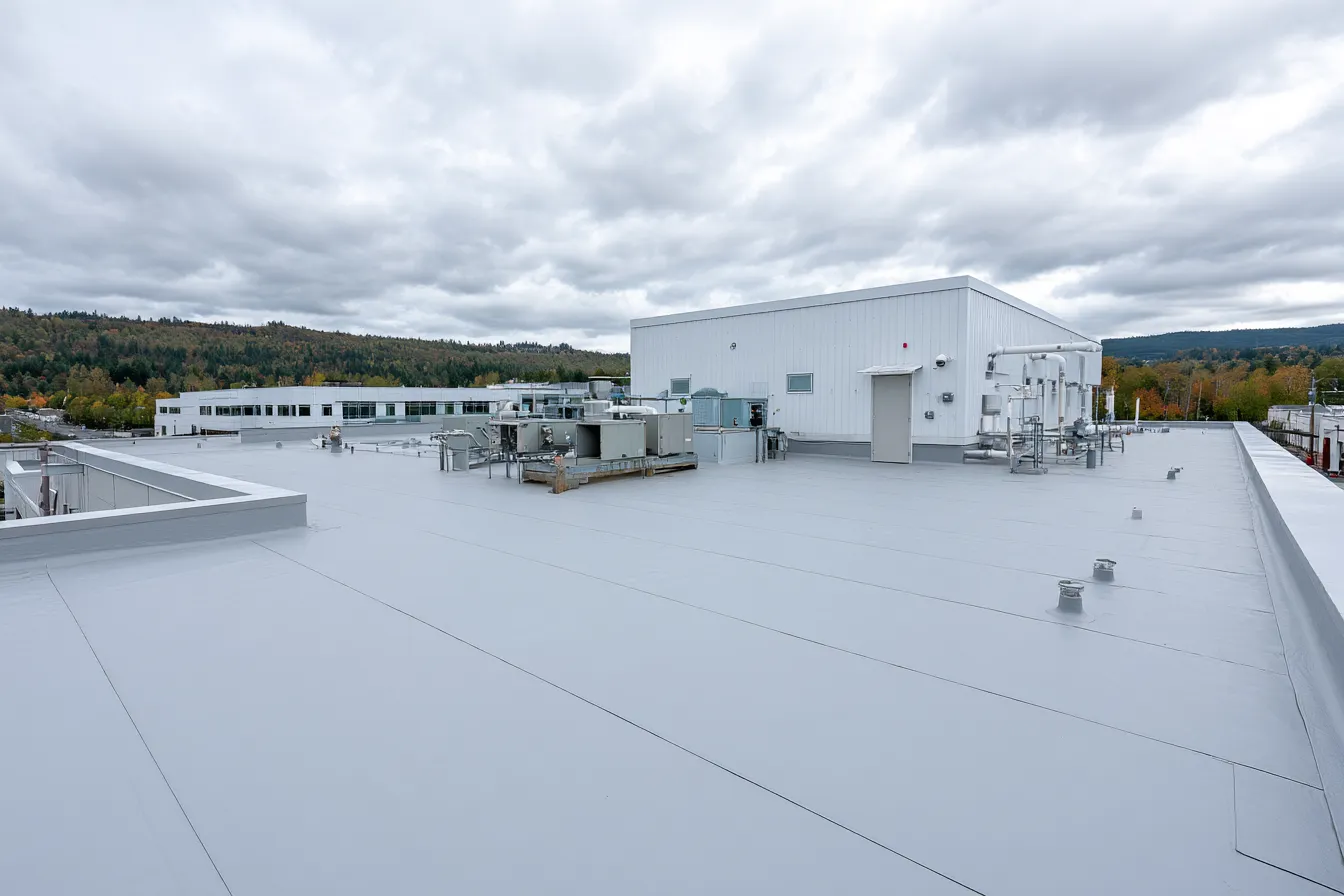
Seams, penetrations, terminations and the drains on a Lewisville flat roof
Four inspection zones, in the order a roofer works them. The first three hold nearly every low-slope failure.
- 01Seams
- Probed along their length. A void in a weld is invisible and is found by feel and tool.
- 02Penetrations
- Every pipe, vent and curb. The collars and boots around them age faster than the membrane they sit in.
- 03Terminations
- Where the membrane stops at a wall or parapet. Loose or unsealed terminations let wind-driven rain behind the system.
- 04Drains and scuppers
- Blocked outlets turn a minor slope problem into standing water across a whole section. Clearing them is the cheapest item on this list by a wide margin.
- 05The field
- Checked for punctures and blisters, which are real but far less common than the four above. A puncture usually has a cause on the roof, like a dropped tool or a dragged unit.
- 06Ponding areas
- Mapped, because water that sits is both a symptom of a drainage problem and a cause of the next one. Mapping them first shows whether drainage or the membrane is the real job.
The workmanship warranty comes from the roofer who does the work.
A Lewisville flat roof gets flood-tested, not eyeballed
Low-slope leaks take longer to locate than steep-slope ones, and a longer visit here is thoroughness. Expect the first visit to run long and the second to be short. On a commercial building the same finding leads to a coating or a full replacement.
Interior evidence is mapped
Where the staining is, and whether it sits near a wall, a penetration or the middle of a bay.
The suspect zones are probed
Seams, terminations and collars in the area above, worked by hand and tool.
The area is flood-tested
Water held on a section to confirm the entry. This is the step that separates a lasting repair from a hopeful one.
Repaired and re-tested
Patched or re-welded with reinforcement where the system calls for it, then tested again before anyone leaves.
Ponding that has not cleared in two days
The one test a building owner can run alone, using nothing but a calendar. Check it after the next rain and note what is still there two days on.
- Standing water still present roughly 48 hours after rain stops
- A dark tide line marking where water sits when the roof is dry
- Blisters or bubbles in the membrane surface
- Seams that have lifted at an edge or look open to a probe
- Interior staining near a wall line, which usually points at a termination
- Debris or vegetation at a drain, which is the cheapest of all these to fix
The 48-hour mark is the widely used industry threshold for ponding, which makes it a checkable standard.
Flat-roof repairs price on the seam, the membrane and the standing water
Low slope fails at its joints far more often than out in the field. A roofer finds the open seam and checks what the water has been sitting on, and the two together set the job.
Get a free estimate- Seam work is the common repair, priced by the run that has to be reopened
- The membrane decides the method: a welded system and a glued one are not the same job
- Ponding leaves saturated insulation that comes out before anything gets sealed
- Drains and scuppers are cleared as part of the fix, not after it
Low slope in Lewisville fails at the seams and the drains
Heat cycles pull at every joint, and a burst of rain finds whichever one gave. A roofer probes the suspect zones before opening anything up.
- 01Seams and edges
- The open field is rarely the problem; the joins and the terminations are.
- 02Standing water
- Water still sitting after the rain stops points at drainage before it points at the membrane.
- 03Heat cycling
- Texas sun works a membrane every day, and the joints feel it before the field does.
Patch, coat or replace, and how ponding gets ruled on
Where a repair stops being the answer. Wet insulation is the line that decides it.
When does a patch stop being enough?
Is ponding water actually a problem?
Could a coating fix this instead?
Why is a flat roof leak so hard to find?
Do I need a full replacement if the insulation is wet?
Send the address and what the ceiling is showing
Low-slope buildings are often occupied, so the interior symptom is usually what you have to work with. Where the stain sits relative to a wall or a penetration narrows the search, and a roofer can start from that.
Prefer to talk? Call now: (469) 240-5301
A low-slope inquiry is read by a person who knows the systems.
Where the stain sits usually points to the seam that opened.