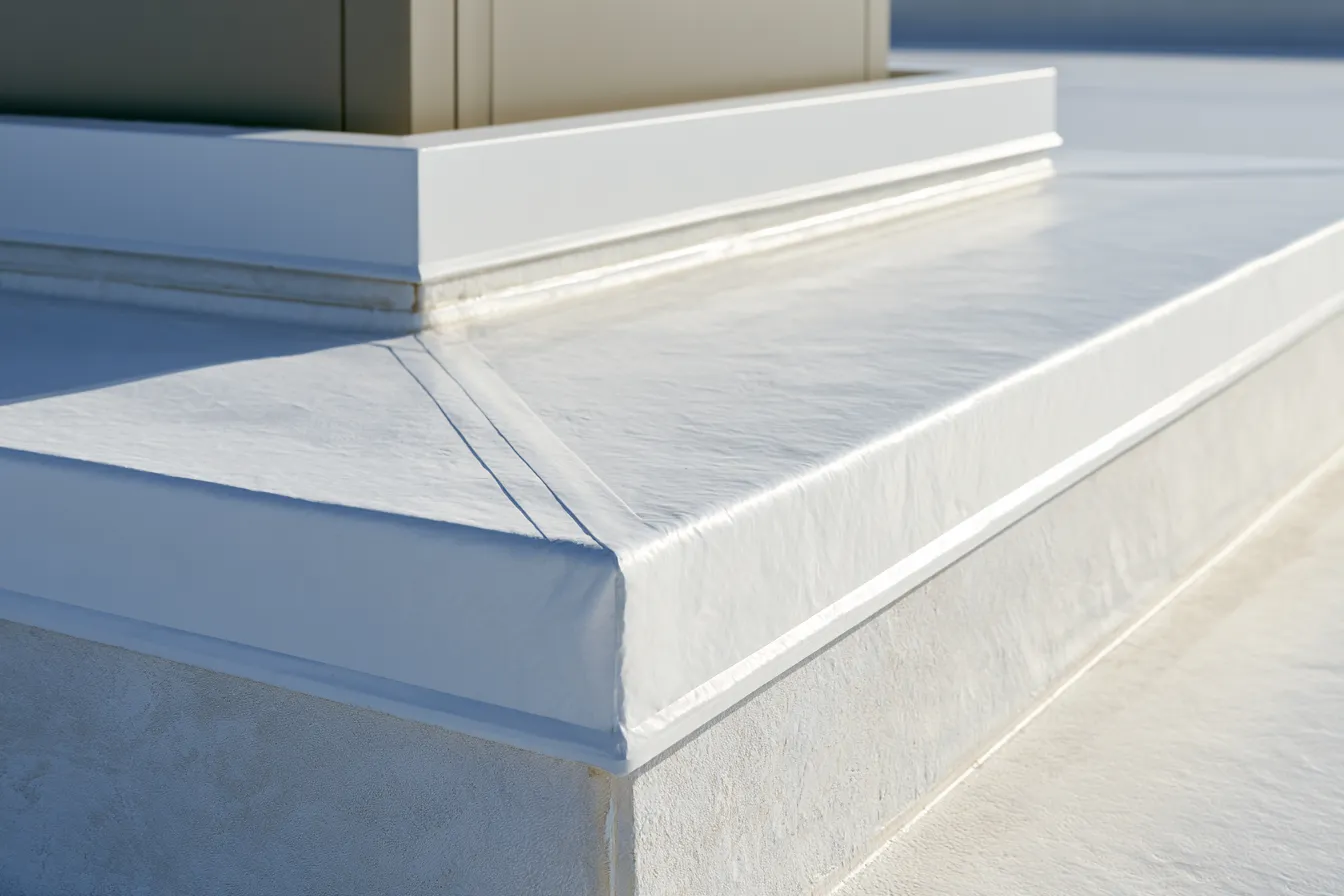
TPO roofing in Lewisville, TX
TPO roofing is a single-ply membrane whose life is decided at the welds. Installation quality matters more than brand.
Age and membrane thickness usually say what the system has left.
TPO roofing in Lewisville, TX lives or dies at the seams
TPO roofing in Lewisville, TX is a single-ply membrane welded together with hot air, and every weld is either continuous or it is a future leak. The field of a TPO roof rarely fails on its own. The seams, the terminations and the details around penetrations are where the water finds a way in.
That puts installation quality ahead of brand on this system. Two roofs in the same product can perform completely differently depending on who welded them and whether anyone tested the welds afterwards.
- Welded, not glued: hot-air welds fuse the sheets into one surface
- Tested: a probe run along a weld finds a void before the weather does
- Detailed: curbs, drains and parapets take more time than the open field
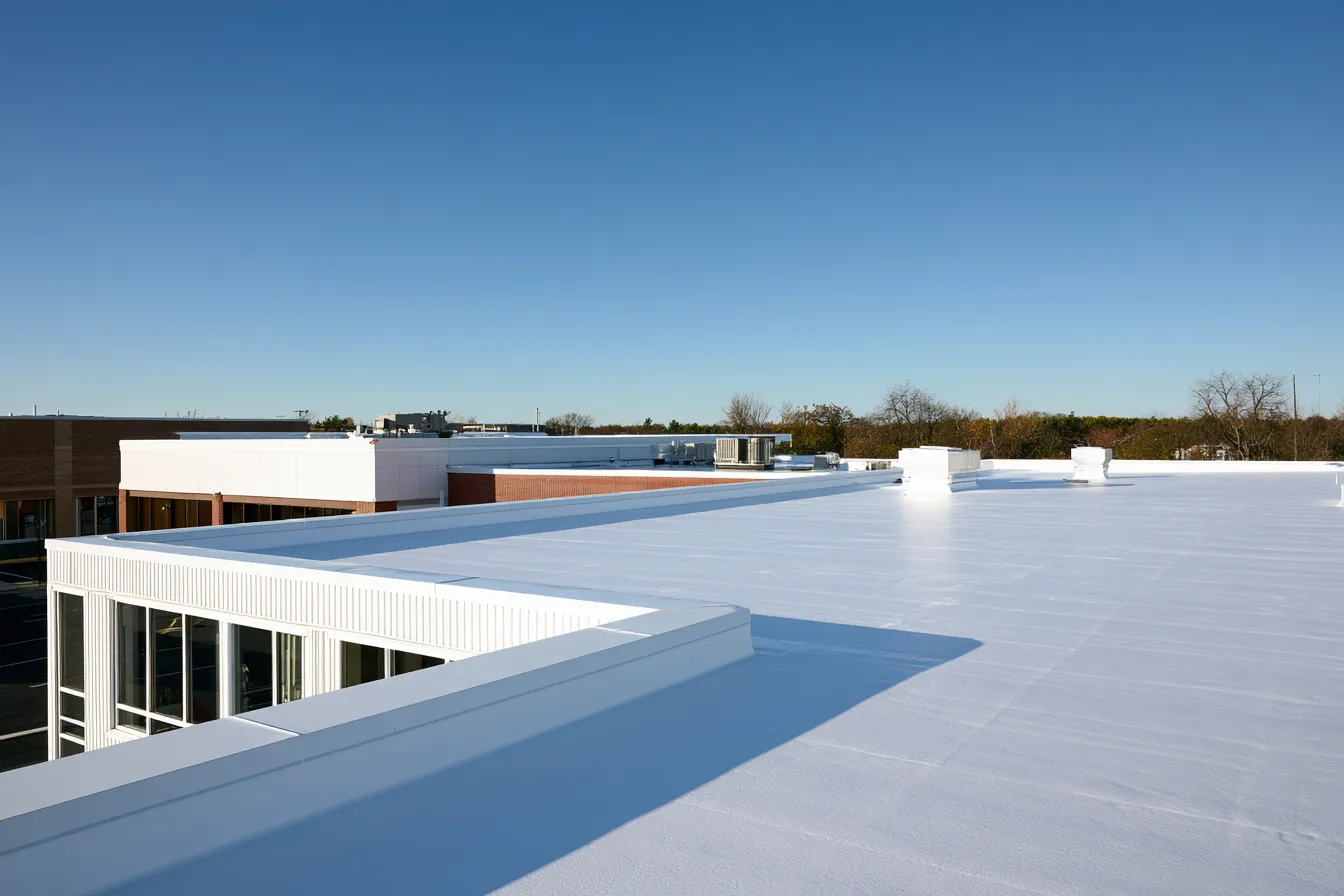
Deck, insulation, fastening pattern and welded seams
The assembly in order. The fastening pattern is the detail most bids leave vague and the one that decides wind performance. The same deck can also take a coating if it is sound, or a full replacement if it is not.
- 01Deck preparation
- The existing surface checked, cleaned and repaired so the assembly above it has something sound to sit on.
- 02Insulation and cover board
- Thickness to the energy code in force, with a cover board protecting it from traffic and giving the membrane a solid substrate.
- 03Fastening pattern
- How many fasteners per board and where, which is what the wind uplift rating depends on.
- 04Membrane thickness
- Commonly 45, 60 or 80 mil. Thicker costs more and lasts longer, and the difference is real rather than marketing.
- 05Welded seams
- Hot-air welded and then probe-tested along their length. Ask whether the testing is included.
- 06Terminations and flashings
- Parapets, curbs, drains and every penetration. This is where the labor hours go.
The installation and its workmanship warranty belong to the roofer; any system warranty comes from the manufacturer.
Seams get welded and then tested, section by section
The sequence. Weather governs the calendar on a membrane job even more than on a shingle one.
Survey, and a core if needed
What is up there now, and whether the insulation underneath is dry. A wet assembly changes the job from a recover to a tear-off.
Substrate prepared and insulation laid
Boards fastened to the specified pattern, staggered, with the cover board over them.
Membrane rolled out and welded
Sheets laid with the specified overlap and hot-air welded. Each day ends with the worked section watertight.
Seams probed, details finished
A probe run along the welds finds voids, then the curbs, drains and parapets are flashed and the roof is walked.
Thickness, reflectivity, and how long TPO lasts in Texas heat
The questions that come up before signing a membrane job.
What membrane thickness should I choose?
Does the white surface actually reduce cooling costs?
How long does TPO last in Texas heat?
Can TPO go over the existing roof?
What is the most common TPO failure?
A membrane's age and thickness decide the options
Both are usually knowable from building records or a small core sample. Once a roofer knows what is up there and whether it is dry, the choice between coating, recovering and tearing off settles itself.
Prefer to talk? Call now: (469) 240-5301
Send the building details and think it over before anything is scheduled.
Send the address, age, and system if you know it, and a roofer takes it.