Storm damage roofing in Lewisville, TX
Hail bruises a roof before it breaks one. Send the address; one of our roofers checks what storm damage the night left.
A roofer walks the roof and tells you exactly what the storm left.
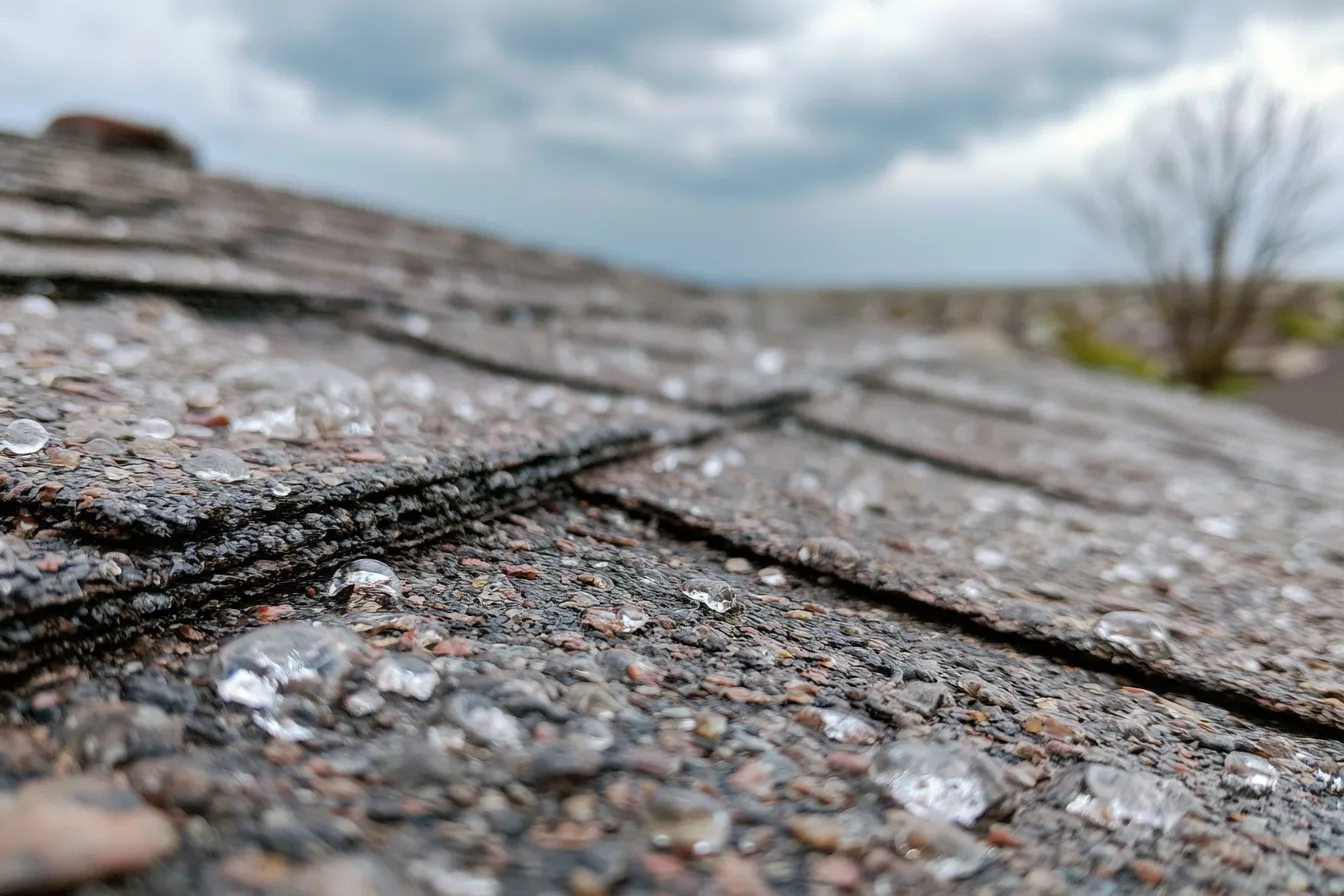
Storm damage roofing in Lewisville, TX starts with bruising, not holes
Most people expect a hole after hail, and that is almost never what happens. A hailstone bruises the mat under the granules, crushing the asphalt without breaking through. The roof keeps water out afterwards, sometimes for a year or more, while the bruised spots weather faster than everything around them. By the time it leaks, the storm that caused it is old news and harder to pin down.
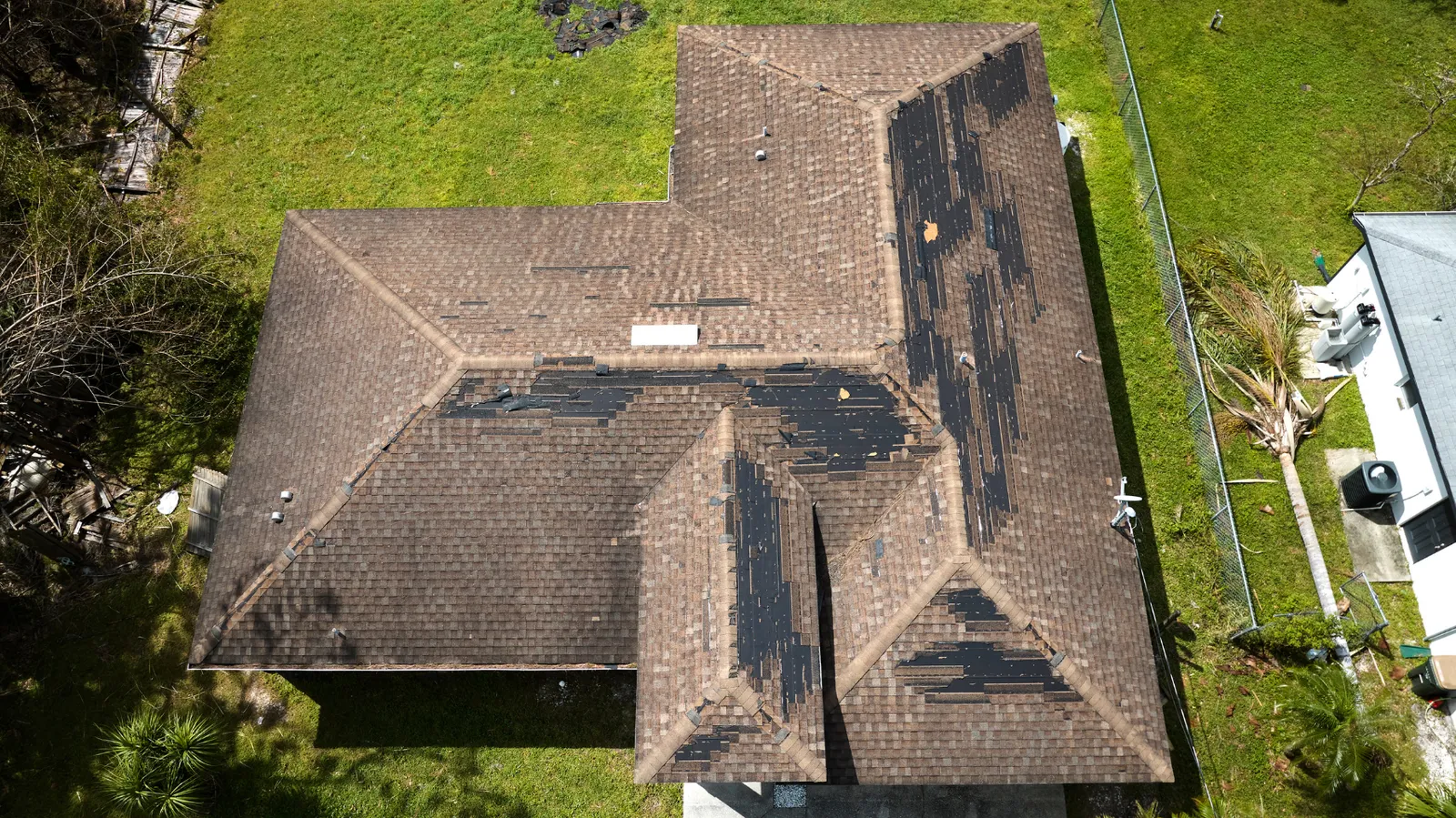
A bruised roof can look completely normal from the yard and still be used up. A roofer checks the soft metals first, because gutters, vents and downspouts dent at a lower threshold than shingles do, and dented metal down at eye level is a reason to go up and look properly.
- Bruising: the mat crushed under the granules, invisible from ground level
- Granule loss: bare asphalt showing where the protective layer was knocked off
- Collateral: dented gutters, vents, downspouts and window screens
- Delay: the leak often arrives seasons after the storm that caused it
Hail damage you cannot see from the driveway
The first four are checkable from the ground and worth a look before you call anyone. The rest need someone on the roof. Soft metals are checked first on hail work too, and an inspection is what settles whether the roof itself is marked.
- Dents in gutters, downspouts, or the metal caps on vents
- Granules collecting at the bottom of downspouts or in the gutter trough
- Torn or dented window screens and dinged air-conditioner fins on the same side of the house
- Splatter marks on a deck rail or a fence that show which direction the storm came from
- Bruises that feel soft under thumb pressure, which a roofer checks by hand
- Creased or lifted tabs, and a ridge cap that has shifted or split
- Exposed fasteners or displaced flashing around chimneys and pipe boots
Ground-level checks only. Nothing on this page is an instruction to get on a roof or a ladder.
Denton County takes damaging hail most springs
Each row is one reported storm, with the date and what came down. The largest in the stretch, just under six inches, fell near Sanger. Sanger, Bartonville and Justin are Denton County, but they are not Lewisville. Treat these as the county backdrop rather than as a claim about any one address. The record behind these numbers is read in full in the Denton County hail post, and the build-era story sits in why whole streets re-roof together.
33 hail days · 168 hail reports · largest hail 5.90" · top gust 96 mph on the Denton County record, 2023–2026.
Source: NOAA / NCEI Storm Events Database, updated August 2026.
Three-inch hail has landed inside Lewisville itself
The county numbers are the backdrop. The town has its own, and they are the ones that matter to a homeowner here. Three-inch hail has been recorded inside Lewisville, with two-and-a-half-inch stones logged at two more spots in town the same day, and an 81 mph gust has come through since, which is hurricane force on the wind scale.
Eleven more Lewisville reports run from September 2023 through March 2025. A roof that came through one hail night is not the same roof that came through three.
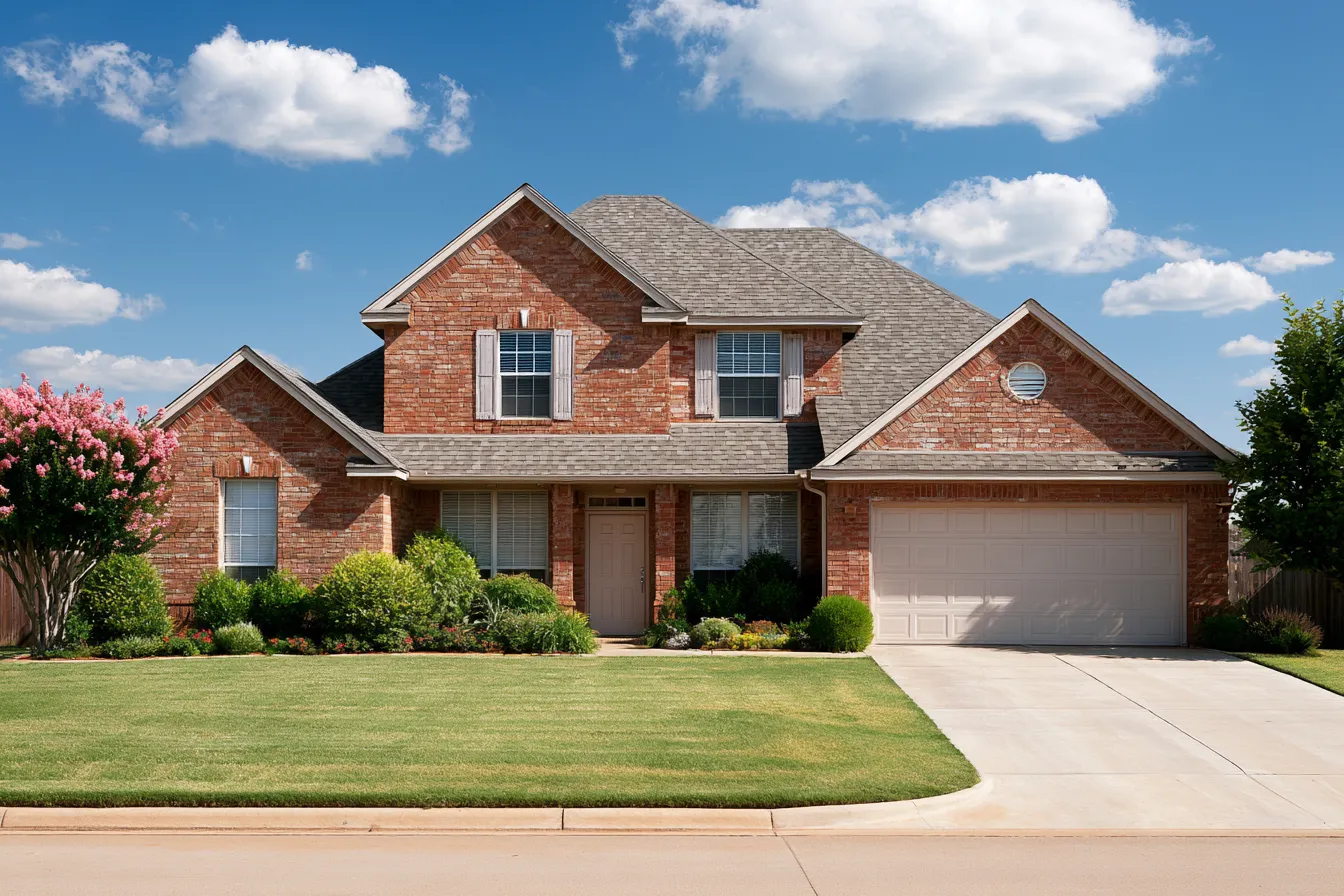
Storm reports: NOAA National Centers for Environmental Information, Storm Events Database, Denton County and points logged at Lewisville itself, 2023 to 2026. Photographs on this page are illustrative.

Storm work gets priced from a measured roof and photographs
Storm work is not set by one failure point the way a leak repair is. It is set by how much damage there is across each slope, which is a count somebody has to make on the roof itself. A storm estimate arrives with photographs attached, and a figure offered before anyone has been up there is not really an estimate. Storm work splits by what the roof needs: a repair where the damage is isolated, a replacement where it is not, and the claim guide when a carrier is involved.
If a claim follows, the claim is the homeowner's to open and the carrier's to decide.
Denton County hail, and what a dated report proves
Hail damage is hard to judge from the ground, and that is where most of the doubt starts. The answers below deal with what a homeowner can tell without getting up there.
How long after a storm can I still get it looked at?
Does a NOAA report prove my roof was damaged?
My roof does not leak. Does it still need a look?
Should I file a claim before or after the inspection?
Someone knocked on my door after the storm. Should I use them?

Get the roof documented while it is still provable
Hail evidence weathers. Granule loss keeps going, bruises blend into ordinary aging, and the further you get from the storm date the harder it is to tie damage to it. A local roofer walks the roof, photographs what is there, and gives you the record. If the roof turns out to be fine, that is a useful thing to have on file too.
Prefer to talk? Call now: (469) 240-5301
Any claim, and any decision to file one, belongs to the homeowner and their carrier.
Share what you saw and a roofer checks it, with nothing to decide on the spot.