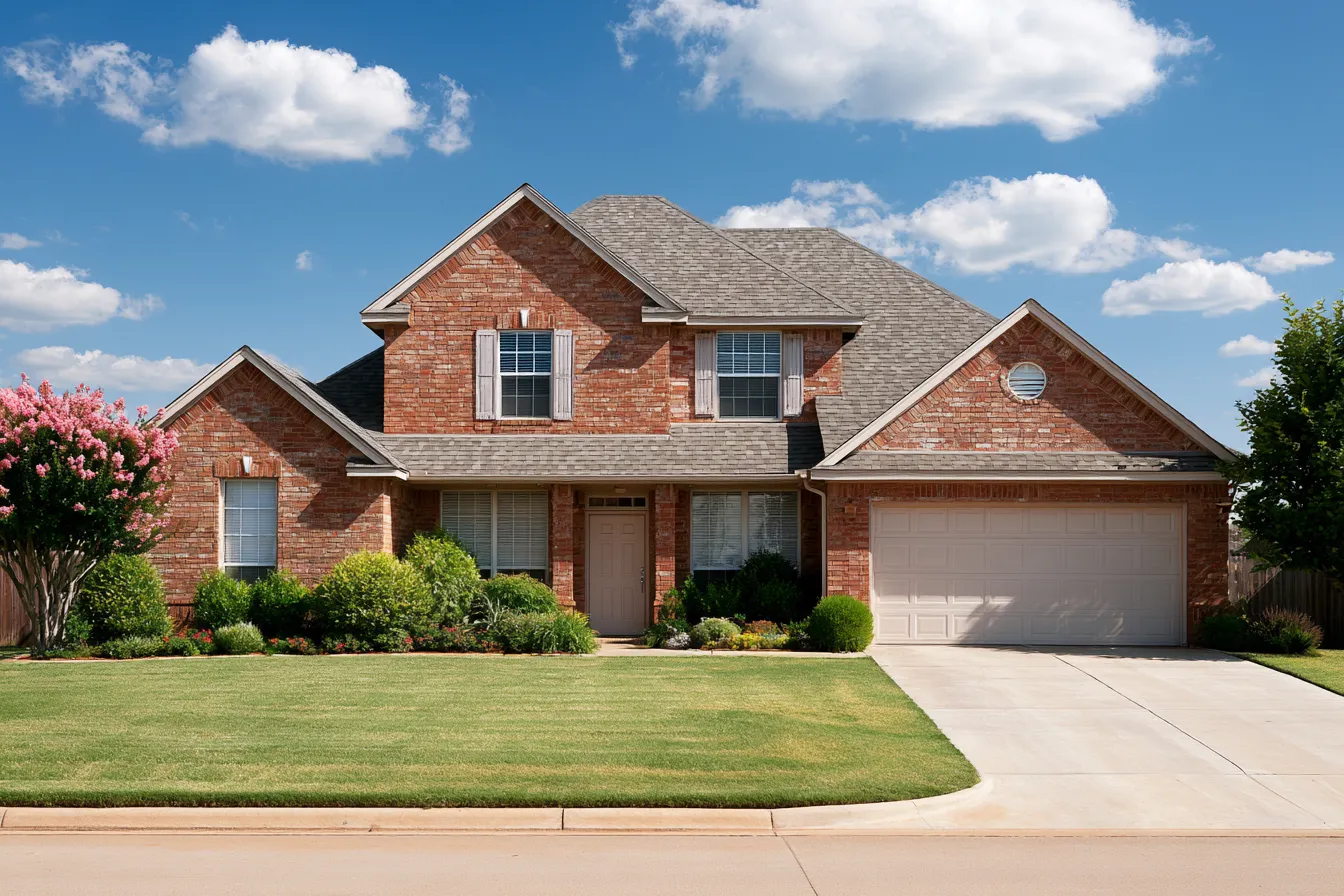
There is a pattern people notice on Lewisville streets and rarely explain: one house gets a tear-off, then two more on the same block within a year or two. It reads like a sales campaign moved through the neighborhood, and occasionally it is. More often it is math. The town grew in bursts rather than steadily, so a great many houses went up inside a short window, and their roofs went on at the same time. Thirty years later those roofs finish at the same time too.
The growth came in two waves
Lewisville roughly doubled through the nineteen-eighties and doubled again through the nineteen-nineties. A town that grows that way is not adding houses at an even trickle; it is adding whole subdivisions at once.
That is why so much of the middle of town shares a build decade. The same concentration shows up in when the houses were built. Whole streets went up together, and whatever went on the roof went on across all of them in the same season.
Roofs inherit the build clock
An asphalt roof in this climate commonly runs somewhere around twenty-five to thirty years, and heat, ventilation and hail all move that figure. A street built in one wave therefore reaches its first replacement in one wave, and a second covering laid across that street at the same time repeats the pattern a generation later.
This is worth knowing mainly so you read your neighbor's dumpster correctly. It usually means your roof is the same age as theirs, not that anything is wrong with yours today.
Hail resets the clock for everyone at once
Denton County records damaging hail most springs. Across the four-year window ending in 2026, the county logged thirty-three separate hail days and one hundred and sixty-eight hail reports, of which one hundred and thirty-nine were at least an inch across.
A hail event does not care about build decades, but it lands on a street whose roofs are already the same age, and it finishes several of them at once. That is the second reason a block re-roofs together, and it is why a spring storm is often followed by a row of tear-offs rather than one.
What to use instead of the calendar
Age tells you when to start paying attention, and the roof itself tells you when to act. Granules collecting in the gutter trough, tabs that have gone brittle across whole slopes rather than at one edge, and daylight visible through the decking from inside the attic are all worth more than a date.
If the roof is past twenty-five and a neighbor's has just come off, the useful next step is having someone look at yours before the next hail season rather than after it. A look costs nothing and it settles the question either way.
Lewisville Apex Roofing does not put a crew on your roof. The roof gets read by the person who would do the work, which is the only reading that decides anything.
When the time does come, what a replacement involves and what drives its cost are both set out in full, and an inspection is how the timing stops being a guess.
If your street is at that age, the useful next step is having your own roof looked at.
Get started